
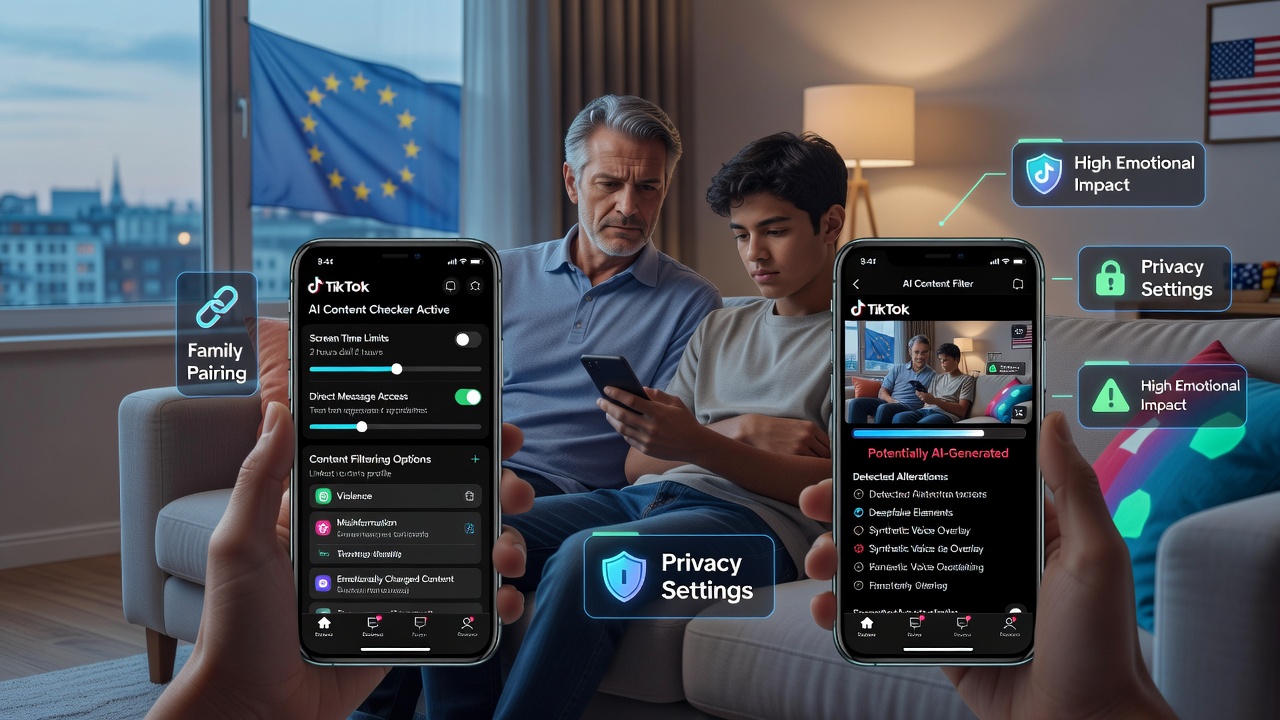
TikTok has extended its parental control tools to users in the European Union and introduced a checker designed to help people identify AI-generated material. For US families, the move is a useful signal of how platforms are responding to regulatory pressure abroad, even though the features described apply to European users.
What the expanded controls cover
Parental controls let a guardian link a teen's account to their own and adjust settings such as screen time limits, direct message access and content filtering. Expanding these tools across the EU means that families there can use them in a broader range of situations. The source material available for this article does not provide a full list of every control or how each one is configured, so readers should check the app's current settings directly.
The AI-content checker
The newly launched checker is intended to help users evaluate whether a video or image may have been created or altered with artificial intelligence. Tools of this kind can offer a helpful first signal, but they are not infallible. Viewers should treat any result as one input among several, especially when a clip is emotionally charged or appears to show a real event.
Why it matters beyond Europe
Companies that build features for the EU often roll them out elsewhere, or at least adjust their policies in response to European rules. American parents who want to know what protections may eventually reach their own accounts can watch these changes closely. In the meantime, the most reliable steps remain the same: review the teen's privacy settings, talk openly about what they see online, and verify surprising content before sharing it.