
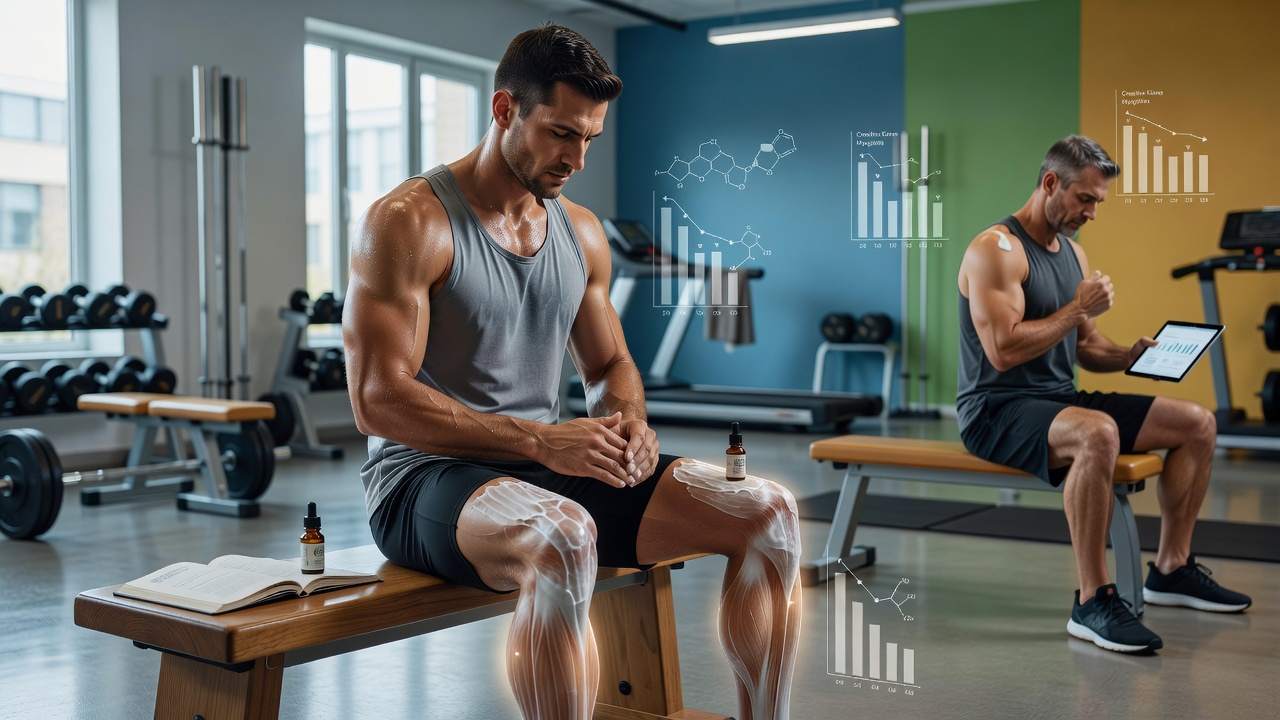
A recent study from researchers in Poland suggests that cannabidiol, or CBD, may help athletes recover after hard training. The work, published in the International Medical Journal and first reported by Marijuana Moment, found benefits for muscle recovery but not for athletic performance itself. That distinction matters for anyone trying to make sense of cannabis in sports.
What the Recovery Findings Show
According to the study, CBD "demonstrates efficacy in modulating delayed-onset muscle soreness (DOMS) and lowering concentrations of muscle damage markers (creatine kinase and myoglobin), particularly within the 48-72 hour window following intensive exercise." Delayed-onset muscle soreness is the aching that typically builds a day or two after strenuous or unfamiliar exercise. Creatine kinase and myoglobin are substances released into the bloodstream when muscle fibers are damaged, so lower levels are one indicator of reduced muscle stress.
The timing is the notable part. The reported effects appeared in the window when soreness and damage markers usually peak, which is why researchers focused on that period rather than the minutes or hours right after training.
Recovery Is Not the Same as Performance
The researchers also found that CBD "does not directly enhance performance." This is a more cautious conclusion than many headlines about cannabis and sport would suggest. An athlete who recovers faster can train more consistently, which may help over time, but the study did not show that CBD makes a person run faster, lift more or jump higher on the day it is taken.
This nuance also matters for public debate. Some opponents of cannabis have shifted their argument from claiming that cannabis harms athlete health to claiming that it is a performance enhancer that should be banned. The recovery findings do not support the performance claim, and the study's own conclusion points the other way.
Other Research on Exercise and Cannabis Use
Related evidence points in similar directions but comes from different designs. Data previously published in the Journal of Cannabis Research showed that people who exercise regularly often report using cannabis products to help them recover from physical activity. Self-reported use patterns show what people are doing, but they cannot establish that a product works.
Separately, a study cited in the same context found that twice-daily use of topical CBD reduced chronic pain in former elite, or professional, athletes. Pain relief is a different outcome from muscle recovery, and the two studies used different methods, so readers should not treat them as interchangeable proof of benefit.
Practical Limits for Readers
The evidence supplied is promising but narrow. The recovery study's findings are tied to a specific window after intensive exercise and to specific biomarkers. Nothing in the source establishes correct doses, product quality, long-term safety for athletes, or how CBD interacts with other medications. Anyone who competes under drug-testing rules should check the current policies of their own sport, since many leagues have dropped cannabis testing but rules differ across organizations and levels of competition.
Anyone considering CBD for training soreness should talk with a physician or sports medicine professional first, especially if they take other medicines or have a medical condition. The research points to a possible recovery aid under study, not a settled recommendation.